Weight Lifting Platform
Weight Lifting Platform
Weight Lifting Platform
Overview: I designed and fabricated a rack and pinion mechanism to lift a 2.5lb load in a constrained space.
Overview: I designed and fabricated a rack and pinion mechanism to lift a 2.5lb load in a constrained space.
Overview: I designed and fabricated a rack and pinion mechanism to lift a 2.5lb load in a constrained space.
Role: Team Member
Team Member: Luke Stratakos
Responsibilities: Design, prototype, and manufacture final product
Skills: CAD, 3D Printing (FDM), Tolerance Stackup Analysis, Hardware Integration, Stress Analysis, Fixtures, Laser Cutting
Role: Team Member
Team Member: Luke Stratakos
Responsibilities: Design, prototype, and manufacture final product
Skills: CAD, 3D Printing (FDM), Hardware Integration, Stress Analysis, Fixtures, Laser Cutting
Role: Team Member
Team Member: Luke Stratakos
Responsibilities: Design, prototype, and manufacture final product
Skills: CAD, 3D Printing (FDM), Tolerance Stackup Analysis, Hardware Integration, Stress Analysis, Fixtures, Laser Cutting
The Challenge:
With a limited budget and constrained space, create a mechanism to turn a rotational input into a linear output to lift a 2.5lb load.
The Challenge:
With a limited budget and constrained space, create a mechanism to turn a rotational input into a linear output to lift a 2.5lb load.
The Challenge:
With a limited budget and constrained space, create a mechanism to turn a rotational input into a linear output to lift a 2.5lb load.
Action:
Action:
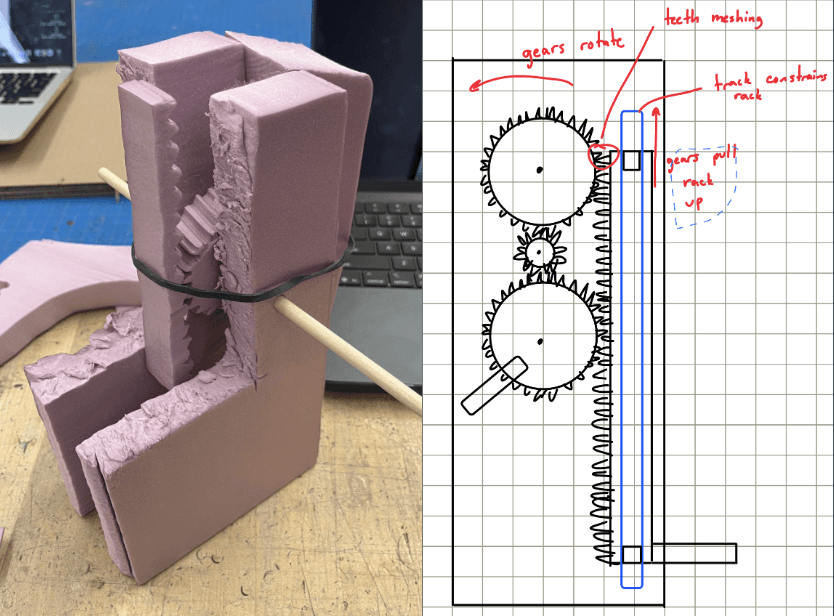
Concept Sketches and Low-Fidelity Prototype
Decided on 3-gear rack and pinion for reliability and simplicity.
Created low-fidelity prototype to understand possible mounting and joint issues.
Concept Sketches and Low-Fidelity Prototype
Decided on 3-gear rack and pinion for reliability and simplicity.
Created low-fidelity prototype to understand possible mounting and joint issues.
Concept Sketches and Low-Fidelity Prototype
Decided on 3-gear rack and pinion for reliability and simplicity.
Created low-fidelity prototype to understand possible mounting and joint issues.
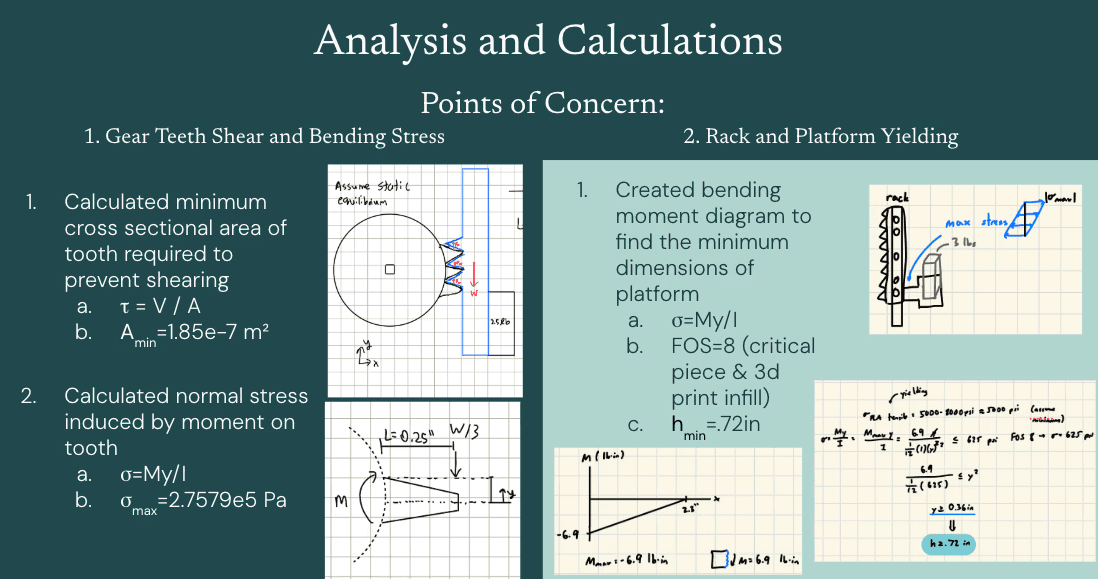
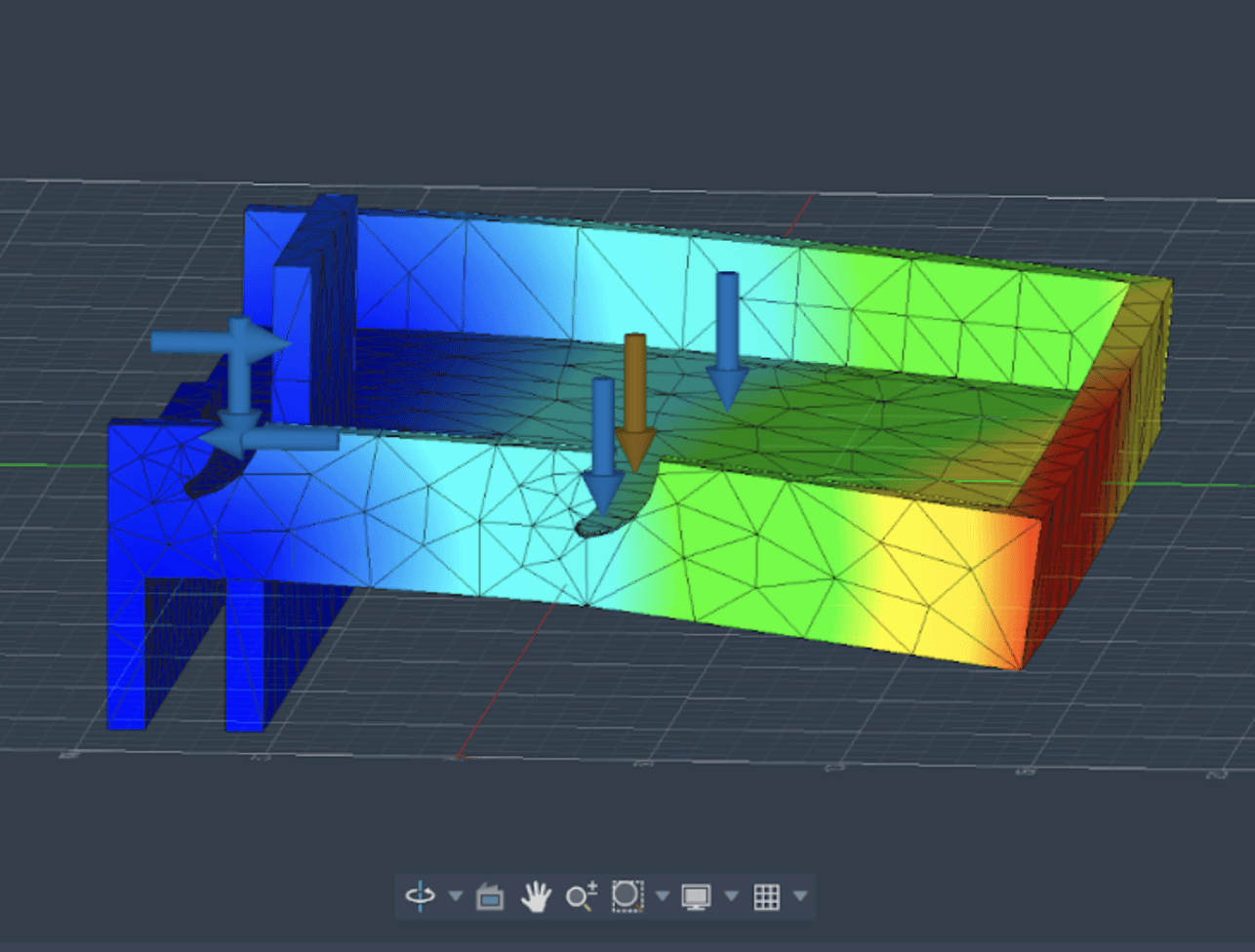
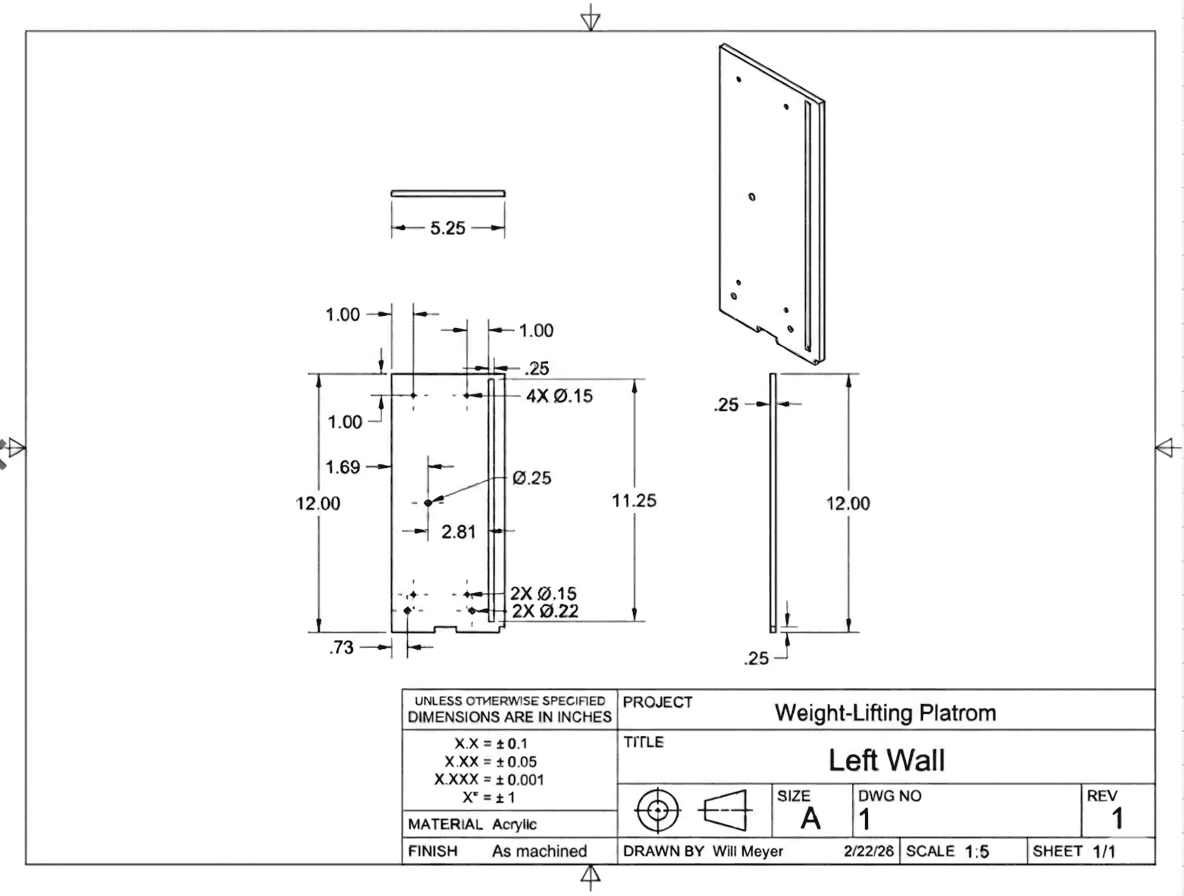
Failure Analysis and Calculations
Performed stress calculations and determined required dimensions with factors of safety.
Utilized shear and moment diagrams.
Failure Analysis and Calculations
Performed stress calculations and determined required dimensions with factors of safety.
Utilized shear and moment diagrams.
Failure Analysis and Calculations
Performed stress calculations and determined required dimensions with factors of safety.
Utilized shear and moment diagrams.
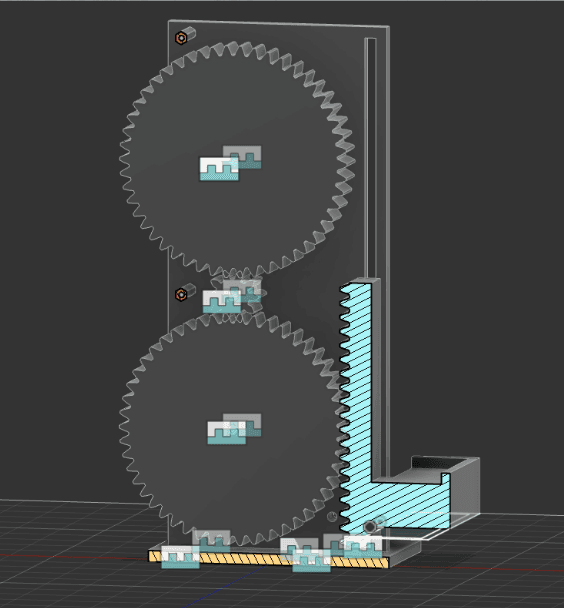
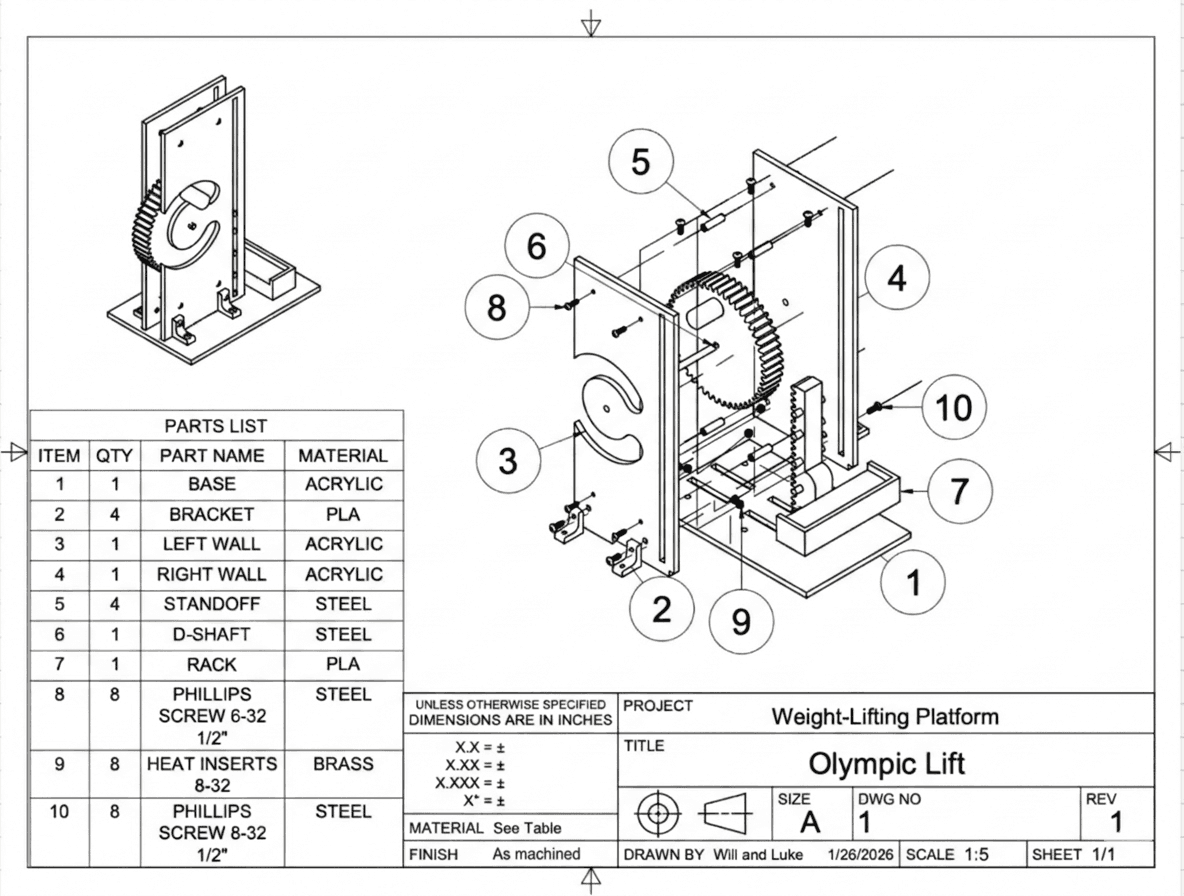
CAD Model
Used 3D CAD Modeling to better understand assembly and how pieces fit together.
CAD Model
Used 3D CAD Modeling to better understand assembly and how pieces fit together.
CAD Model
Used 3D CAD Modeling to better understand assembly and how pieces fit together.
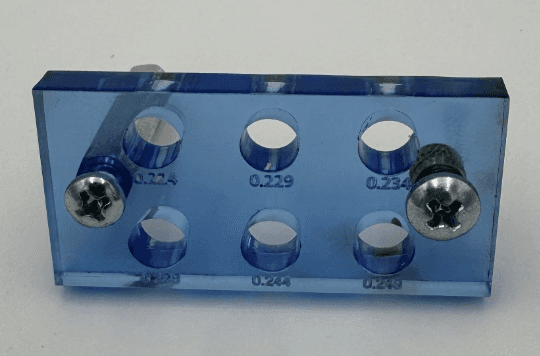
Test Cuts
Created test cuts to find tolerance ranges for the hardware.
These compensate for kerf from laser cutting.
Test cuts help reduce material and cost of process.
Test Cuts
Created test cuts to find tolerance ranges for the hardware.
These compensate for kerf from laser cutting.
Test cuts help reduce material and cost of process.
Test Cuts
Created test cuts to find tolerance ranges for the hardware.
These compensate for kerf from laser cutting.
Test cuts help reduce material and cost of process.
Critical Part Prototype
I 3D printed and laser cut material to understand total assembly and catch design issues.
Key Takeaways:
Three gears decrease reliability.
Handle wouldn't rotate gears (lacked mechanical advantage).
Critical Part Prototype
I 3D printed and laser cut material to understand total assembly and catch design issues.
Key Takeaways:
Three gears decrease reliability.
Handle wouldn't rotate gears (lacked mechanical advantage).
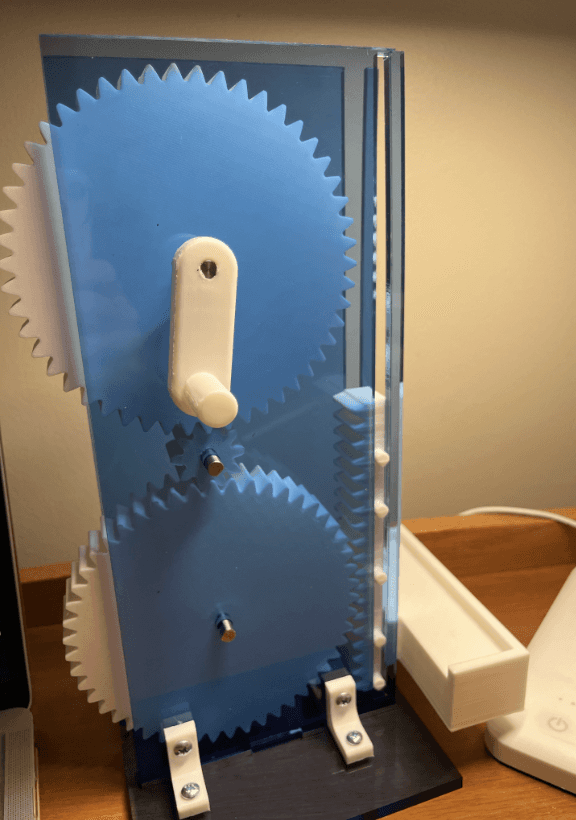
Critical Part Prototype
I 3D printed and laser cut material to understand total assembly and catch design issues.
Key Takeaways:
Three gears decrease reliability.
Handle wouldn't rotate gears (lacked mechanical advantage).
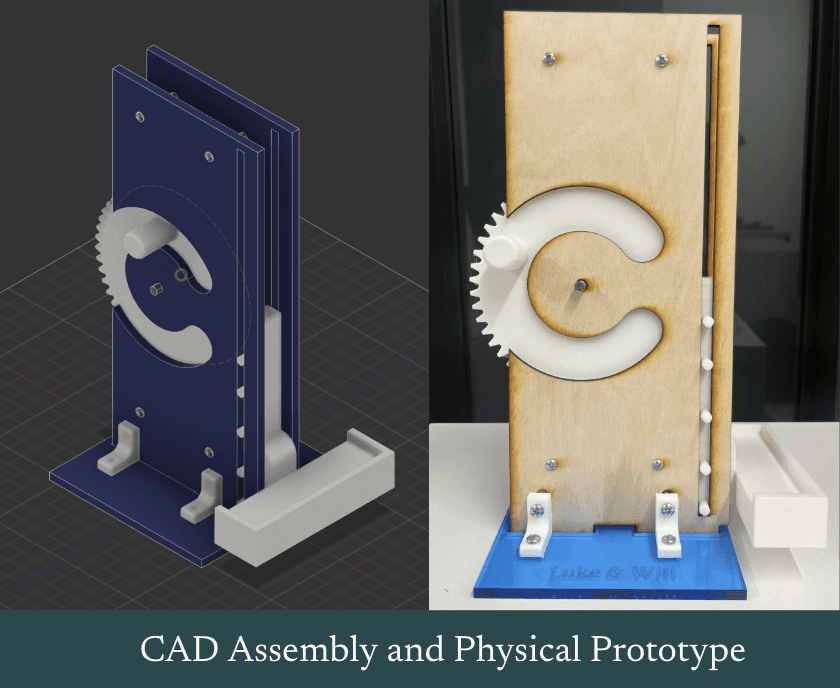
High-fidelity Prototype
I simplified the model (1 gear instead of 3).
Increased moment arm of handle to increase torque applied.
Worked well! But whole platform would topple over when weight was placed on platform.
High-fidelity Prototype
I simplified the model (1 gear instead of 3).
Increased moment arm of handle to increase torque applied.
Worked well! But whole platform would topple over when weight was placed on platform.
High-fidelity Prototype
I simplified the model (1 gear instead of 3).
Increased moment arm of handle to increase torque applied.
Worked well! But whole platform would topple over when weight was placed on platform.
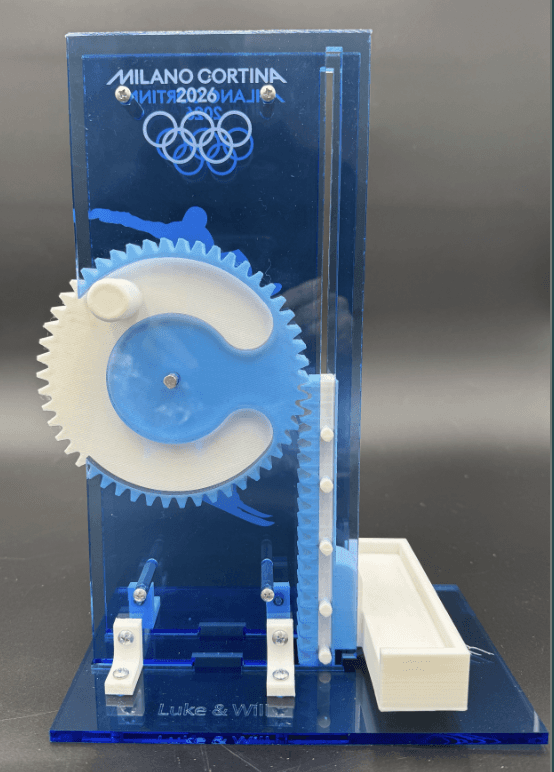
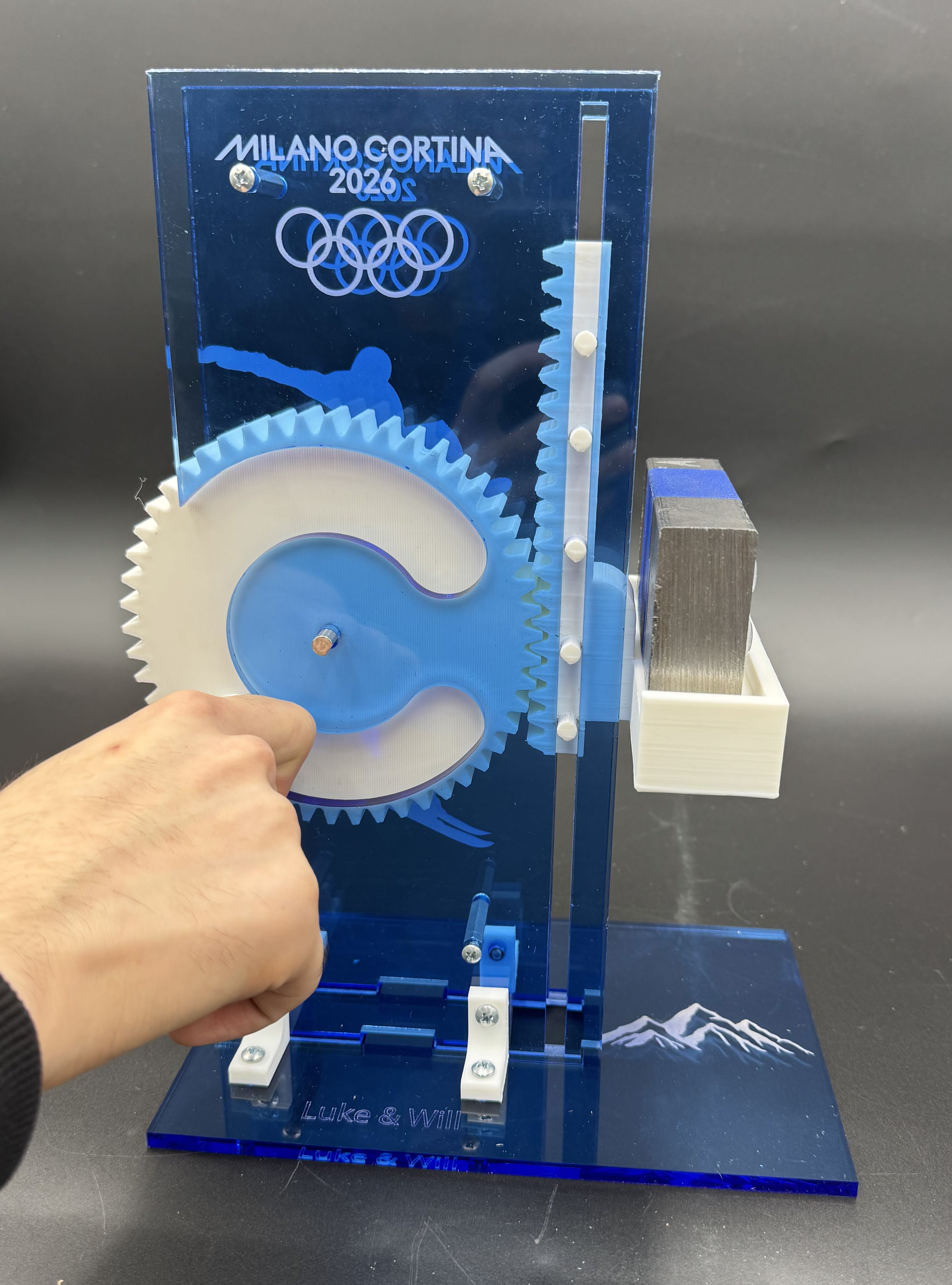
Final Product
Used acrylic and extended base to prevent tilting.
Added Olympics Theme engravings.
Final Product
Used acrylic and extended base to prevent tilting.
Added Olympics Theme engravings.
Final Product
Used acrylic and extended base to prevent tilting.
Added Olympics Theme engravings.
Results:
I created a functional, aesthetic, and space-constrained lifting device!
I further developed my skills in iterative prototyping (3D printing and laser cutting) with stress analysis.
I learned 2 huge lessons:
The simpler the design the BETTER. They're more reliable.
Do TESTS, it will cut down cost of materials used.
Results:
I created a functional, aesthetic, and space-constrained lifting device!
I further developed my skills in iterative prototyping (3D printing and laser cutting) with stress analysis.
I learned 2 huge lessons:
The simpler the design the BETTER. They're more reliable.
Do TESTS, it will cut down cost of materials used.
Results:
I created a functional, aesthetic, and space-constrained lifting device!
I further developed my skills in iterative prototyping (3D printing and laser cutting) with stress analysis.
I learned 2 huge lessons:
The simpler the design the BETTER. They're more reliable.
Do TESTS, it will cut down cost of materials used.
More Projects:
More Projects:
More Projects: